
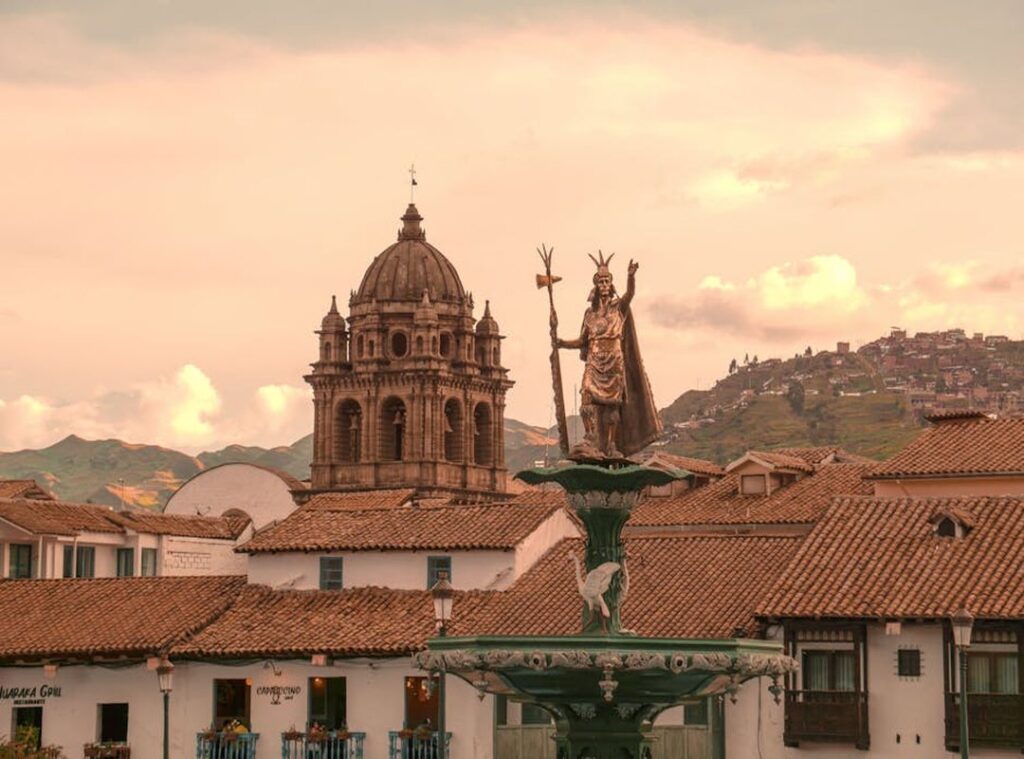
I’ve always found history fascinating, especially the Inca Empire. It’s a complex and rich civilization that can be hard to grasp. Creating a dibujo mapa mental de los incas is a great way to visualize and understand it better.
You might be wondering, why a mind map? Well, it helps break down the empire’s structure and history into manageable parts. This guide will walk you through how to create one, step by step.
We’ll cover key elements, their significance, and even give you some examples. Trust me, by the end, you’ll have a clearer picture of the Inca Empire.
So, let’s dive in.
What is a Mind Map?
A mind map is a visual tool that helps you organize and connect information. It’s like drawing a picture of your thoughts.
At the center, you have the main idea. From there, you branch out into related topics. Each branch can have sub-branches, and you use keywords to label them.
This structure makes it easy to see how everything connects.
Mind maps are great for visual learners. They help break down complex ideas into something more manageable. Imagine trying to understand the intricate history and culture of the Incas.
A dibujo mapa mental de los incas can make it much clearer.
These maps are not just pretty pictures. They’re practical tools that can help you remember and understand information better. Whether you’re studying for an exam or planning a project, a mind map can be a game-changer.
Understanding the Inca Empire
The Inca Empire, one of the largest and most powerful empires in pre-Columbian America, rose to prominence in the 15th century. It was centered in what is now Peru but stretched across parts of modern-day Ecuador, Colombia, Chile, Bolivia, and Argentina.
Geography. The Incas thrived in a diverse landscape, from the high Andes mountains to the coastal deserts. This varied geography allowed them to develop advanced agricultural techniques, like terracing, which helped feed their growing population.
Governance. The empire was highly organized. The Sapa Inca, or emperor, ruled with absolute power.
He was supported by a complex bureaucracy that managed everything from taxes to public works. This structure kept the empire running smoothly.
Society. Incan society was hierarchical. Nobles, priests, and skilled artisans were at the top, followed by farmers and laborers.
Everyone had a role, and the system was designed to keep everyone in line.
Culture. The Incas were known for their impressive architecture, including the famous Machu Picchu. They also developed a sophisticated road system, dibujo mapa mental de los incas, that connected different parts of the empire.
Their art and textiles were equally remarkable, showcasing their creativity and skill.
The Inca Empire’s significance lies in its contributions to agriculture, governance, and culture. Studying it helps us understand how ancient civilizations managed to thrive in challenging environments. Plus, it gives us insights into the ingenuity and resilience of human societies.
Creating the Central Idea of Your Mind Map
When you start a mind map, the central idea is your anchor. It’s the main topic that everything else branches from. For example, if you’re mapping out The Inca Empire, that would be your central focus.
Why does this matter? Well, having a clear central idea helps you stay organized and focused. It’s like the North Star for your thoughts.
Now, how do you visually represent this central idea? You can use an image or a large, bold word. If you’re mapping dibujo mapa mental de los incas, a picture of Machu Picchu could work perfectly.
This visual representation makes the central idea stand out, so it’s easy to see at a glance. It also adds a bit of creativity, making your mind map more engaging and memorable.
Branching Out: Major Categories of the Inca Empire
When people think about the Inca Empire, they often picture Machu Picchu and the Andes Mountains. But there’s so much more to it.
Geography
The Andes Mountains and Machu Picchu are iconic, sure. But let’s not forget the vast network of roads and bridges that connected the empire. These were engineering marvels.
Governance
Most folks know about the Sapa Inca, the emperor. But what about the Ayllu system? It was a community-based structure that managed everything from agriculture to social order.
Pretty innovative, if you ask me. dibujo mapa mental de los incas
Society
The Inca society had a complex class system. Did you know that family units were at the heart of their social structure? They were the building blocks of the empire, and understanding them is key to seeing how the Incas thrived.
Culture
Religion, art, and language were central to Inca culture. But here’s a thought: Their intricate textiles and metalwork weren’t just for show. They were deeply symbolic and played a crucial role in their daily lives and rituals.
dibujo mapa mental de los incas can help you visualize these interconnected branches. It’s a great way to see how geography, governance, society, and culture all wove together to form this remarkable civilization.
Adding Sub-Branches and Details

When you’re building a mind map, adding sub-branches can make all the difference. It helps to break down each major category into more specific details. For example, under Geography, you could add sub-branches for different regions.
Some people argue that too many sub-branches can clutter your map. They say it makes things confusing. I get that.
But here’s the deal: without those sub-branches, you might miss out on important details.
Using keywords and short phrases is key. This keeps your mind map concise and easy to read. Think of it as a quick reference guide.
Let’s take dibujo mapa mental de los incas as an example. Under Geography, you might have sub-branches like “Andean Region,” “Coastal Areas,” and “Amazon Basin.” Each one with its own set of keywords.
For History, you could use sub-branches like “Early Inca Empire,” “Expansion Period,” and “Spanish Conquest.” Keywords here could be “Pachacuti,” “Machu Picchu,” and “Francisco Pizarro.”
In Culture, sub-branches might include “Religion,” “Art,” and “Textiles.” Keywords could be “Inti,” “Quipu,” and “Llama Wool.”
By adding these sub-branches and using clear keywords, you create a detailed yet organized mind map. It’s a balance, but one that’s worth striking.
Enhancing Your Mind Map with Visuals and Colors
I remember the first time I tried to create a dibujo mapa mental de los incas. It was a mess. Just a bunch of lines and words that didn’t make much sense.
Adding visuals like images, symbols, and icons can really change that. They make the mind map more engaging and memorable.
Colors are another game changer. Use them to differentiate between categories and highlight important information.
When I started using colors, my mind maps became so much clearer. It’s like each color told a different story, making it easier to see the big picture.
Pro tip: Don’t go overboard with the colors. Too many can be distracting. Stick to a few key ones for the best results.
FAQs About Creating a Mind Map of the Inca Empire
Q: What tools can I use to create a mind map?
A: Both digital tools (like MindMeister) and traditional pen and paper are effective. I prefer using a big sheet of paper and colorful markers for my DIBUJO MAPA MENTAL DE LOS INCAS.
It feels more personal and creative.
Q: How do I keep my mind map organized?
A: Start with a clear central idea and systematically add branches and sub-branches. This helps you avoid getting lost in a tangle of information.
Trust me, I’ve been there.
Q: Can I use a mind map for other historical topics?
A: Yes, the same principles apply to any complex subject. Whether it’s ancient civilizations or modern history, a mind map can help you see the big picture and all the little details.
Mastering the Inca Empire with a Mind Map
To start, identify the main topics related to the Inca Empire. These could include their geography, culture, and significant historical events. Next, organize these topics into branches from a central idea.
dibujo mapa mental de los incas can visually represent this structure, making it easier to see connections and hierarchies.
Use images, symbols, and colors to make your mind map more engaging and memorable. This visual approach aids in both understanding and retaining information about the Inca Empire.
Practice regularly with different subjects to refine your mind mapping skills.